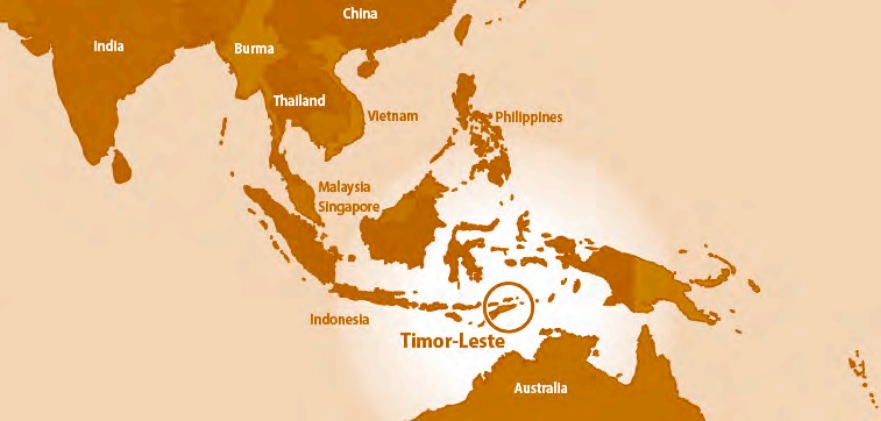
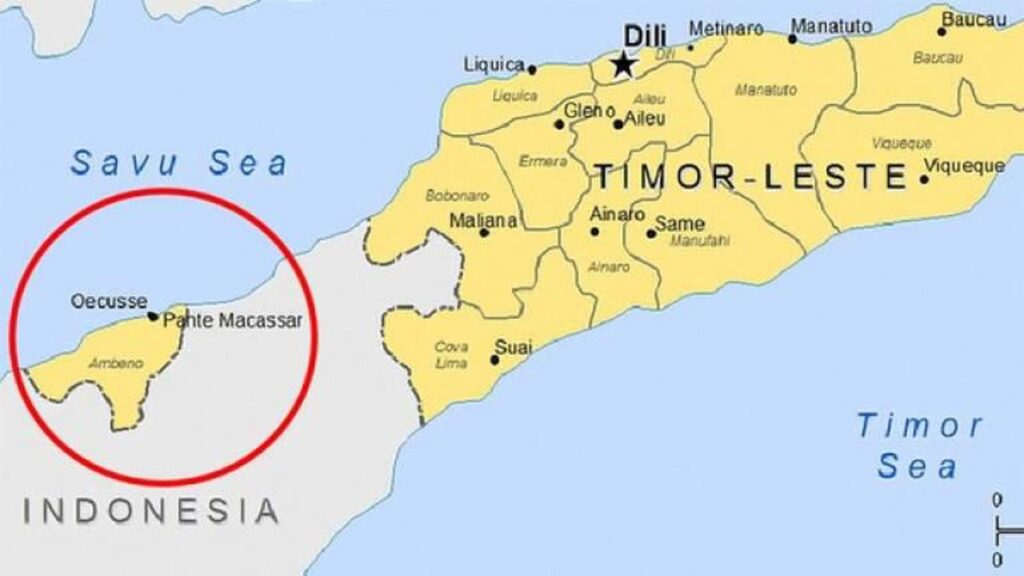
Timorese President José Ramos-Horta advocated a political and intelligent solution to resolve the issue of marking a small part of the land border between Timor-Leste and Indonesia in the Oe-Cusse enclave. “I believe we can find a solution for the border, which can be a political solution, because not everything is based on international treaties. The treaty was made by Portugal and the Netherlands more than 100 years ago and the land we are talking about is not the size of a football field,” José Ramos-Horta told the Timorese online newspaper “O Diligente”.
“The finalization of the land border with Indonesia has not yet been completed due to complaints made by the community of Naktuka, in Oe-Cusse.”
East Timorese living in Oe-Cusse, on the border with Indonesia, fear losing land to the neighboring country
“At the time, we were forbidden to talk about it. They told us it was a national secret,” a local resident told the newspaper O Diligente.
“The community admits that it will not hand over the land to Indonesia, explaining that the area belonged to Portugal before the Indonesian occupation in 1975, based on a treaty signed between the Portuguese and the Dutch in the 19th century (in 1859) and supplemented by the Hague Convention of 1904.”
According to the newspaper O Diligente, the Prime Minister of East Timor and chief negotiator for the Land and Sea Border, Xanana Gusmão, who was one of the main activists for his country’s independence for many years during the Indonesian occupation, went to Oe-Cusse on February 1st to talk to the community about the controversy related to the markings. Xanana Gusmão explained that, during the Fifth Constitutional Government, when he was also Prime Minister, he made a commitment to the President of Indonesia at the time, Susilo Bambang Yudhoyono, not to expel citizens of the neighboring country who grew food in Naktuka. “We consulted the community and our ancestors. Everyone accepted, so we moved forward with the process. Now, the population does not accept it, but for me it is not a problem, future generations can resolve this”, highlighted Xanana Gusmão, lamenting that people condemn him and think that he sold Timorese territory to Indonesia. “But in fact, the families who live in this area and who cultivate vegetable gardens and floodplains are Timorese, not Indonesian,” he emphasized.

Tomás Nekap, an official at the Bene Ufe of Ministry of Agriculture, told the newspaper O Diligente that the new markings could have a negative impact on the lives of the population, especially in terms of food security. “The population considers Naktuka to be their dish. If part of the land belongs to Indonesia, the population will go hungry,” he warned.

Rede ba Rai, a group that defends land and housing rights in East Timor, advocates that society treat the issue as a national problem and not leave the population of Oe-Cusse to face the issue alone. The director of Rede ba Rai, Pedrito Vieira, believes that the negotiating teams did not deal with the issue transparently, meaning that all decisions and discussions to date have been made in secret. “We do not know what fundamental bases the Timorese government used to negotiate with Indonesia. Everything was done in great secrecy. When we talk about national interests, there is no room for secrets and the government has an obligation to be honest with the Timorese people,” emphasizes Pedrito Vieira.
“I won’t give up a single meter of land that is mine. I’m not leaving, even if they try to cut off my head,” warned Júlio Cuno, a farmer in Naktuka, to the newspaper O Diligente.
About East Timor and Goa
East Timor has a territory of almost 15,000 km², occupying the eastern part of the island of Timor in Southeast Asia. The country is mountainous and has a tropical climate with monsoon rains and, like Goa, a hot and humid tropical climate, and about 1.3 million inhabitants. According to the Constitution of East Timor, Tetum and Portuguese have the status of official languages. About 96% of the population professes Roman Catholicism. The country was colonized, like Goa, by the Portuguese Empire in the 16th century and was known as Portuguese Timor until decolonization, as Goa, around 1974.
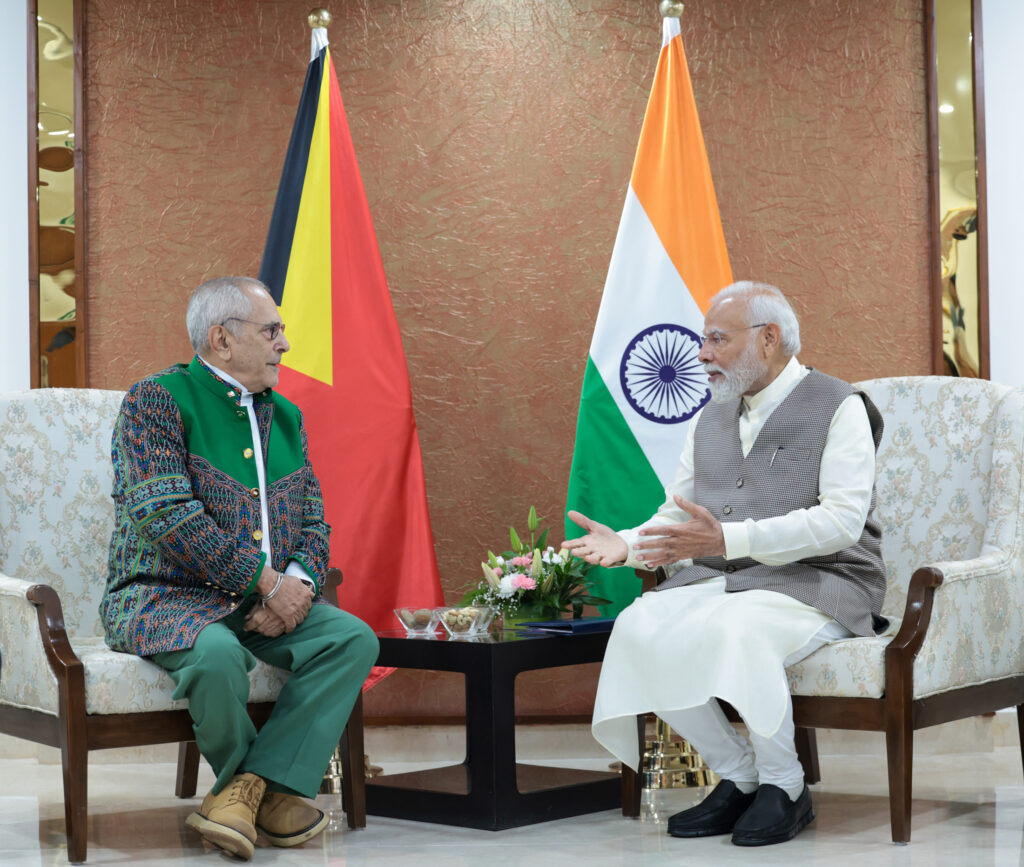
The President of Timor-Leste Dr. José Ramos Horta visited India in January 2024 on the occasion of the 10th Gujerat Global Summit in Gandhinagar where he met with the Prime Minister of India Narendra Modi.
In 1975, Timor-Leste declared its independence, but later that year it was invaded and occupied by Indonesia, and was annexed as the country’s 27th province the following year. In 1999, after a United Nations-sponsored act of self-determination, the Indonesian government relinquished control of the territory, and on May 20, 2002, Timor-Leste became the first new sovereign state of the 21st century.