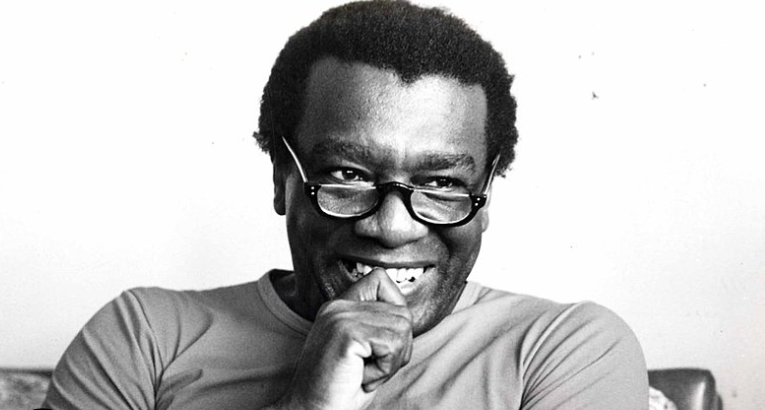
Milton Santos
On 3 May, the centenary of the birth of Brazilian geographer Milton Santos was commemorated. He is one of the leading figures in world geography and of fair globalisation, born in the state of Bahia (Brazil) and deceased in 2001.
Milton Santos earned his doctorate from the University of Strasbourg (France) and specialised particularly in the socioeconomic field, where he defended the idea of a globalisation based on solidarity and grounded in values different from those of the hegemonic world.
In doing so, Milton Santos complemented the Heartland Theory of the famous British geographer Halford Mackinder, who, over a century ago, developed one of the most influential geopolitical theories in history, proposing that control over Eurasia — the ‘heart’ of world power — was the key to global domination. Milton argued, however, for a globalisation based on solidarity and founded on values distinct from those of the hegemonic world. In its economic aspects, he analysed the role of corporations in the internationalisation of capital, financial flows and their implications for local culture. He theorised about and criticised aspects of the contemporary world. His ideas remain references for socioeconomic analyses of the world and, particularly, of the Global South.
Milton lived and worked in several countries, including the United States and Canada. He was a professor at the University of São Paulo (Brazil) and received several awards, among them, in 1994 in Paris, the renowned International Prize for Geography Vautrin Lud.
For political reasons, he was forced into exile, and it was during his exile that he published his most important works and began to advocate for a geography committed to understanding structural inequalities and social transformation.
The divided space
His book The Divided Space: the two circuits of the urban economy in underdeveloped countries, originally published in French in 1975 under the title L’espace partagé, and whose first Portuguese edition was released in Brazil in 1979, is today considered a classic in geography.
In this book, Milton Santos develops a theory on the composition of two circuits in the urban economy: an upper, or modern, circuit, intensive in capital and high technology; and a lower, non-modern, or archaic, circuit, made up of traditional services, intensive in labour and low technology.
The relations of labour overexploitation and the contemporary pattern of capitalist accumulation result from the combination of these two circuits, Milton writes. Cities are thus systems that include the upper circuit of globalised political-economic relations, and the lower circuit, an economy produced from local needs. Focused on the study of urban reality in underdeveloped countries, this work achieved the greatest impact in English-language geography and was considered a historical milestone in the interpretation of urbanisation in developing countries, reflecting the concerns of a more mature phase of Miltonian thought, in which globalisation becomes a central theme, shifting the scale of study from national social formation to the links between global processes and places.
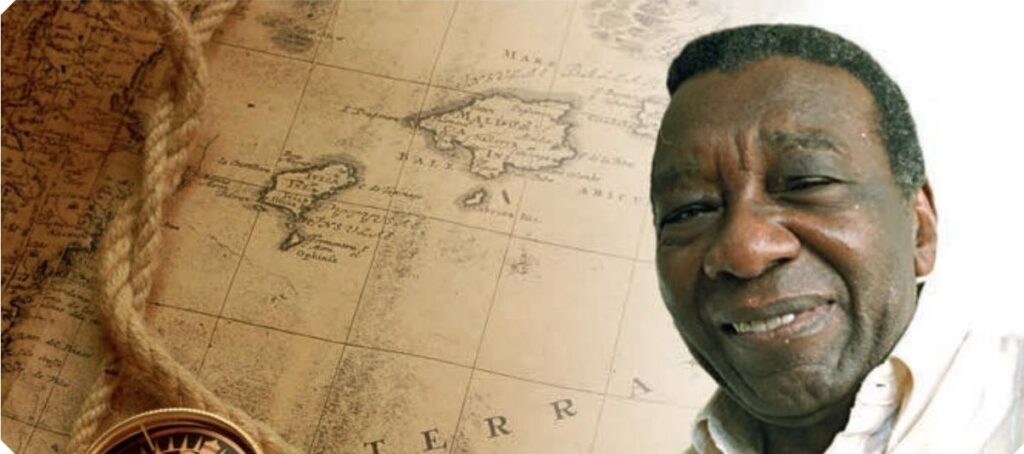
Milton Santos
Milton Santos’s strongly critical stance was always accompanied by an optimism that led him to foresee possibilities for transformation. In his view, while totalitarianisms became predominant, cities reasserted themselves as a space of freedom for popular culture.
Positive human characteristics
It was not only as a scientist that Milton Santos became famous worldwide, and especially in the Global South. Positive human characteristics — so-called qualities, virtues or character strengths — were strong traits of Milton’s personality.
Professor Marcos Formiga, one of the directors of CNPq (the National Council for Scientific and Technological Development of Brazil), who in 1978 organised an international seminar on urban poverty attended by renowned experts from several continents — among them Milton — and who spent time with him, highlights in an interview with our Lusophone Society of Goa: “Milton needed a great deal of courage to assert himself in prejudiced environments, sometimes with veiled racism, sometimes overt.” He continues: “His tenacious character never let him give up. With iron determination, he always pressed forward, without ever looking back.” He concludes by stating: “In daily life, Milton was an affable person, easy to get along with, good-humoured, able to laugh at himself. Not to mention his permanent smile as his trademark. Confident in his charisma, he would always arrive with his broad smile, as a complement to his frame as a strong man of personality.”