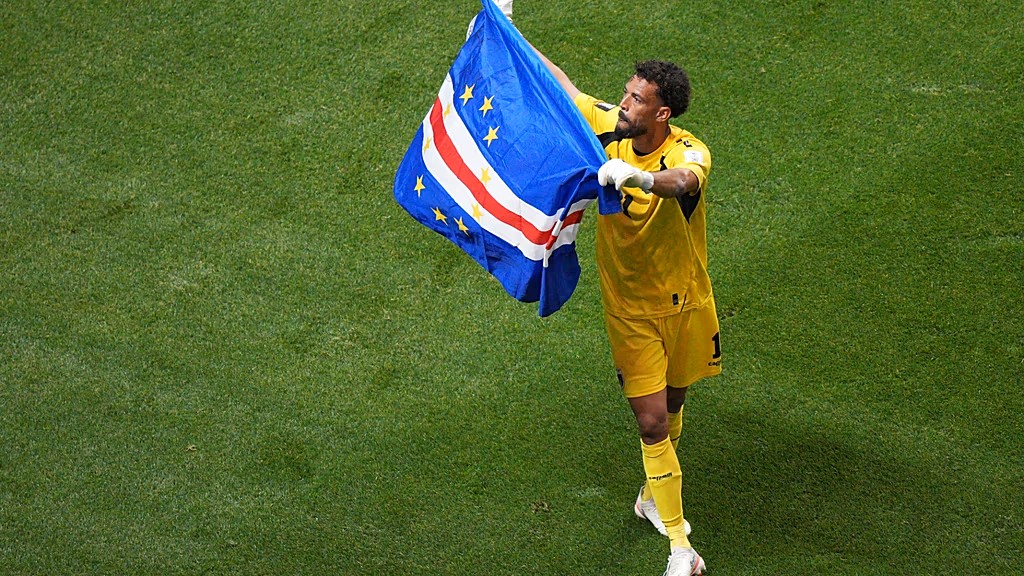
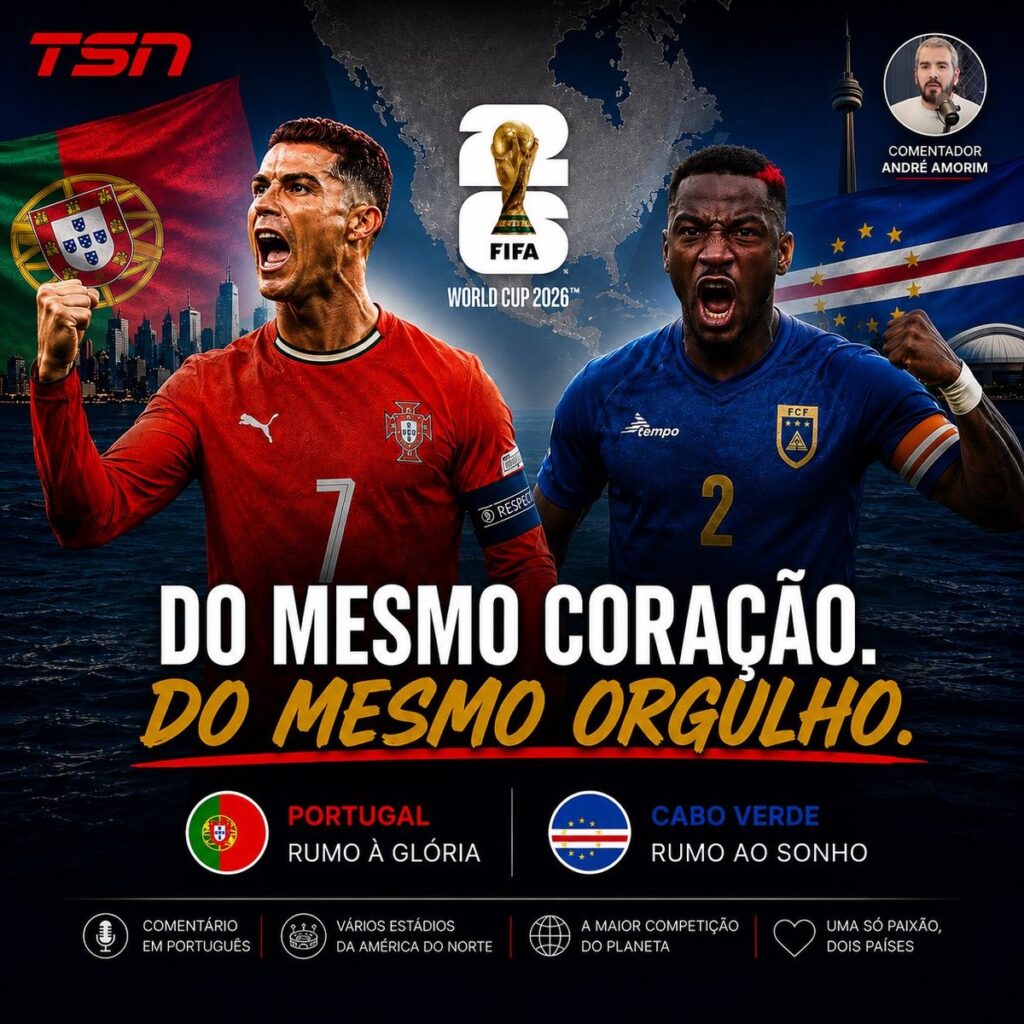
The 2026 FIFA World Cup, featuring three national teams from Portuguese-speaking countries — Brazil, Portugal and Cape Verde — will be the most Lusophone World Cup ever. The most remarkable fact is that Cape Verde will participate in a World Cup for the first time in its history. With a population of around 500,000, Cape Verde is the smallest country by area ever to compete in a World Cup finals tournament and the second least populous, behind Iceland.
Brazil has been drawn into Group C alongside Morocco, Haiti and Scotland. Portugal, led by Cristiano Ronaldo, is in Group K with the Democratic Republic of Congo, Uzbekistan and Colombia. Finally, Cape Verde is in Group H together with Spain, Saudi Arabia and Uruguay. Brazil, five-time world champions, have never missed a World Cup finals tournament, while the Cape Verdean squad includes several players who compete in the Portuguese league.
The tournament, which takes place from 11 June to 19 July 2026, will conclude with the final at MetLife Stadium in New Jersey, United States. For the first time, 48 national teams will participate, with matches hosted across three countries: Mexico, the United States and Canada.
Cape Verde: 500,000 People and a Strong Identity
“Ten Islands. One Nation. One Dream.” is the slogan of the Cape Verde national team.
In terms of territory, Cape Verde is the smallest country ever to participate in a World Cup and the second smallest in population among all nations to have reached the tournament, after Iceland.
Currently ranked 69th in the FIFA World Rankings, Cape Verde was an overseas province of the Portuguese Empire, established in 1462, roughly during the same historical era as Goa (1510), until independence on 5 July 1975. Goa, by contrast, was incorporated into the Indian Union following the Indian military intervention of 1961.
Bubista, the coach of the Cape Verde national team, told the Spanish newspaper Marca: “Our people are so excited and so happy. Our people are spread across the world.”
It is estimated that more Cape Verdeans live abroad than in Cape Verde itself. This vast diaspora, spread across Portugal, the Netherlands, France, the United States and many other countries, forms a nation living far from its homeland but never disconnected from it.
This is where history meets football. A significant part of the squad travelling to the World Cup consists of children of the diaspora — players born outside Cape Verde, raised in other countries, yet who chose to represent the land of their parents.
Portuguese, Cape Verde’s official language, is used in official documents, legislation and newspapers. However, in everyday life, on the streets, in homes and among friends, the language most commonly heard is Cape Verdean Creole — the mother tongue and language of the heart.
Schools teach in Portuguese, yet during breaks students naturally switch to Creole. It is a language with a Portuguese lexical base but strongly influenced by West African languages, and it remains the ultimate symbol of Cape Verdean cultural identity and resilience.
There are two Creole words that have no exact translation and which help explain the essence of the Cape Verdean people.
The first is sodade. It is not quite the same as the Portuguese saudade. It expresses something deeper: the pain of departure, the hope of return and the enduring love felt across distance by a people shaped by emigration.
The second is morabeza. It represents warmth, kindness and genuine hospitality — the ability to make a stranger feel like a neighbour within minutes. If sodade is what Cape Verdeans feel when they must leave, morabeza is how they welcome those who arrive.
Videos of supporters celebrating Cape Verde’s qualification for the 2026 World Cup went viral on social media, with thousands rejoicing in the historic achievement of the “Blue Sharks,” as the national team is known. Yet attending matches in person will be a challenge for many Cape Verdean supporters. Between tickets, flights and accommodation, watching a single match at the stadium may cost more than five thousand US dollars.
Did You Know the World Cup Ball Is Manufactured in Pakistan?
The official match ball of the tournament, the Adidas Trionda, whose name pays tribute to the three host nations, is manufactured in Sialkot, Pakistan, a city that produces more than two-thirds of all footballs made worldwide.
The manufacturer is Forward Sports, Adidas’ official supplier of match balls for the FIFA World Cup.
The ball incorporates motion-sensor technology designed to support the Video Assistant Referee (VAR) system during matches.
According to Adidas, the iconography of the Trionda reflects the three host countries: a red maple leaf representing Canada, a blue star representing the United States, and a green eagle representing Mexico.
And since we are already in Pakistan, let us take a short journey across the border to neighbouring India.
India: The World Cup That Never Was
India qualified for the 1950 FIFA World Cup in Brazil but ultimately chose not to participate.
Much of the world was still recovering from the devastating economic consequences of the Second World War, and international travel remained expensive and complicated.
Several nations from different continents withdrew during the qualification process or declined participation altogether due to financial difficulties and logistical constraints associated with travelling to South America at the time.
Over the years, various myths emerged regarding India’s absence from the 1950 World Cup. One of the most popular claims is that India withdrew because FIFA would not allow its players to compete barefoot. However, the reality appears far more complex.
For India, which had gained independence only three years earlier, in 1947, financing and organising a journey to the other side of the world for a football tournament was an overwhelming challenge for the young All India Football Federation (AIFF), which was still adapting to the realities of a newly independent nation.
Despite never having participated in a World Cup and currently ranked 136th in the FIFA rankings, India remains a country that FIFA cannot afford to ignore.
The national team may one day achieve qualification, but this will require greater engagement from both authorities and the population, particularly younger generations, in a country still dominated by cricket and field hockey.
China: Absent from the Pitch, Present in the Spotlight
Travelling further north to China, another neighbour of India, we find a different football story.
China has failed to qualify for the FIFA World Cup since its only appearance in 2002, when it was eliminated in the group stage without scoring a single point.
Over the past two decades, Chinese football has faced financial crises and a series of corruption scandals involving players, referees and club officials, many of whom have been sanctioned or banned indefinitely.
With the national team once again absent, Chinese fans have found an unexpected representative at the tournament: referee Ma Ning.
The 46-year-old official has become a national talking point, inspiring viral memes and even attracting sponsorship deals from major Chinese companies such as Hisense and Lenovo.
Known for his strict style, Ma Ning has earned the nickname “the master of cards.” In a 2015 match in Shanghai, he showed nine yellow cards and three red cards — a personal record.
This is Ma Ning’s second World Cup appearance. Four years earlier, he served as a fourth official.
Indiscipline at This World Cup?
With three players sent off, the opening match of the 2026 World Cup between Mexico and South Africa has already entered the list of the most ill-disciplined matches in World Cup history.
Only the infamous “Battle of Nuremberg”, the 2006 Round of 16 clash between Portugal and the Netherlands, recorded more red cards, with four dismissals.
Remarkably, the opening match of 2026 almost matched the total number of red cards shown throughout the entire 2022 World Cup.
Mexico’s 2–0 victory over South Africa was highly eventful, with Brazilian referee Wilton Pereira Sampaio issuing three red cards.
What Are the Main New Rules at the 2026 World Cup?
The 2026 FIFA World Cup has introduced several changes to the Laws of the Game approved by FIFA, affecting refereeing, VAR usage, substitutions, medical assistance and anti–time-wasting measures.
Mandatory hydration breaks have been introduced in all 104 matches. Each break lasts three minutes and takes place midway through each half, regardless of weather conditions or stadium climate control.
Players may now be sent off if they deliberately cover their mouths during confrontations on the pitch, a measure designed to improve transparency in communication.
Players, coaches or staff who deliberately leave the pitch in protest against refereeing decisions may also be dismissed.
To reduce delays, throw-ins must now be taken within five seconds, or possession is awarded to the opposing team. A similar rule applies to goal kicks, which may result in a corner kick if delayed excessively.
Substitutions have also been tightened: players must leave the field within ten seconds of being shown the substitution board, or the substitute must wait and the team temporarily plays with ten men.
Medical stoppages now require players to remain off the pitch for one minute, except in cases involving serious injury, goalkeepers, or disciplinary fouls.
VAR has also been granted expanded powers, including correcting mistaken second yellow cards, ensuring the correct player is sanctioned, and reviewing certain corner-kick decisions when feasible without delaying play.
A Global Tournament Like Never Before
A striking statistic highlights the globalisation of modern football: 289 players at the 2026 World Cup will represent countries other than those in which they were born.
Only eight national teams are composed exclusively of players born in their own territory: Brazil, South Africa, Czechia, Colombia, Sweden, Saudi Arabia, Austria and Panama.
The most extreme case is Curaçao, whose squad of 26 players includes 25 born in the Netherlands.
All players meet FIFA eligibility rules through nationality, ancestry or residency requirements.
And Finally, a Little Music
What would a World Cup be without its iconic songs — those that remain in fans’ memories long after the final whistle?
The 2026 World Cup soundtrack ranges from Shakira to Anitta, and from The Rolling Stones to Sam The Kid.
As in 2022, FIFA has opted for a 18-track official album featuring global stars and returning names from previous tournaments.
This marks a departure from the tradition up to 2018, when each World Cup was represented by a single official song such as “Waka Waka (This Time for Africa)” (2010) by Shakira or “We Are One (Ole Ola)” (2014) by Pitbull, Claudia Leitte and Jennifer Lopez.
The expansion from 32 to 48 teams transforms the tournament into the largest World Cup in history, spanning 16 cities across North America and adding new logistical complexity, time zones and cultural diversity to the global spectacle.